Insulin resistance can hide in plain sight. You might feel fine, but your cells are already struggling. This guide shows you the tell‑tale signs, why they matter, and what steps you can take before things get serious.
We’ll break down the science, walk through the most common symptoms, and point you to simple tests and natural fixes. By the end you’ll know exactly what to look for and when to get a doctor involved.
Comparison of Insulin Resistance Symptoms (April 2026)
| Symptom | Physiological Cause | Associated Biomarker | Best For |
|---|---|---|---|
| Hyperinsulinemia | Compensatory increase in insulin secretion | Fasting insulin levels | Biochemical confirmation |
| Acanthosis Nigricans | Insulin activates growth receptors on skin cells | Fasting serum insulin >30 µU/mL | Visual skin indicator |
| Abdominal Weight Gain | Excess visceral fat accumulation | High waist-to-hip ratio | Central obesity tracking |
| Dyslipidemia | Altered lipid metabolism | Triglyceride/HDL ratio | Lipid profile assessment |
| Hypertension | Increased vascular tone and inflammation | Blood pressure >130/80 mmHg | Cardiovascular screening |
What Is Insulin Resistance?
Insulin resistance means your cells don’t answer to insulin like they should. The pancreas then pumps out more insulin to keep blood sugar steady. When this tug‑of‑war goes on for years, the pancreas can’t keep up. That’s quando blood sugar starts to rise and type 2 diabetes can appear.
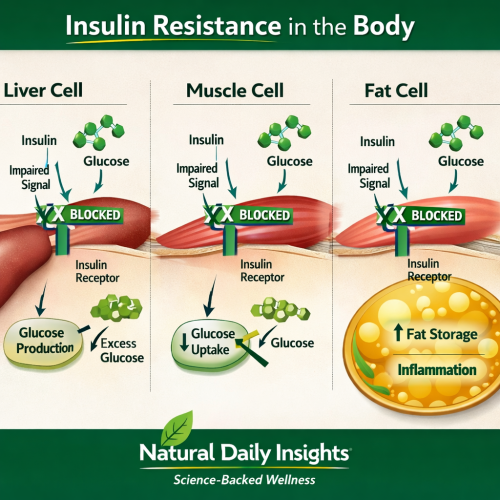
The main tissues involved are liver, muscle, and fat. In the liver, insulin tells cells to stop making new glucose. In muscle, it opens doors for sugar to rush in for energy. In fat, it helps turn sugar into fat so the body can use it later.
How Insulin Resistance Affects the Body
When insulin can’t do its job, every organ feels the ripple. In the liver, sugar keeps being made even quando you’ve just eaten. In muscle, the doors stay closed, making you feel sluggish. In fat, insulin’s “store this” signal stays on, leading to inflammation.
- High insulin leads to more visceral fat storage.
- Chronic inflammation makes the insulin signal even weaker.
- Brain fog and cravings rise as glucose management fails.
Common Symptoms to Recognize
Because the problem starts inside cells, many people notice no sign at first. Still, a few clues show up more often than others, such as constant fatigue after small tasks, intense cravings for sweets, and the expansion of the waistline despite a stable diet.
A simple fasting insulin test can reveal trouble years before your fasting glucose numbers actually move. Monitoring these subtle shifts is the key to long-term metabolic health.
Conclusion
Understanding the symptoms of insulin resistance gives you a real advantage. You can catch the problem early, test it with reliable labs, and act with proven habits like daily movement and proper nutrition.
Frequently Asked Questions
What blood test best shows insulin resistance?
The fasting insulin test is the simplest. It measures how much insulin is in your blood after an overnight fast. A high value hints that your body is working overtime to move sugar into cells.
Can I improve insulin resistance without medication?
Yes. A diet rich in fiber, lean protein, and healthy fats lowers the insulin surge after meals. Adding daily movement, especially a 30-minute walk after lunch, boosts muscle uptake of sugar.
Why does my skin sometimes get dark patches?
Those patches, called acanthosis nigricans, happen quando excess insulin activates growth factors on skin cells. The result is thicker, darker skin, often on the neck or underarms.
Is weight loss enough to fix insulin resistance?
Losing even 5-10% of body weight can dramatically improve insulin sensitivity by reducing visceral fat and inflammatory hormones.